Unfortunately, BT1886 is something of a flawed concept for displays calibration as it artificially lifts the near black shadow brightness based on the display's actual black level.
This can obviously cause washed out shadow detail, especially in less than ideal viewing conditions.
BT1886
BT1886 can be a problem on displays with even slightly lifted blacks, due to the way it raises EOTF, especially in the shadow region. This causes the shadows to become washed-out, which in turn will cause the colourist to attempt to grade the shadows darker. When the graded footage is then viewed on a display with a standard power law gamma, or a display with a lower black and calibrated to BT1886, the shadows will appear crushed.
This can be seen in the following images, showing the target gamma for a display with a 0.01 nit black level, and 100 nits peak white. The lift in the shadows can clearly be seen.
(The blue plot represents a Rec709 power law 2.4 EOTF)


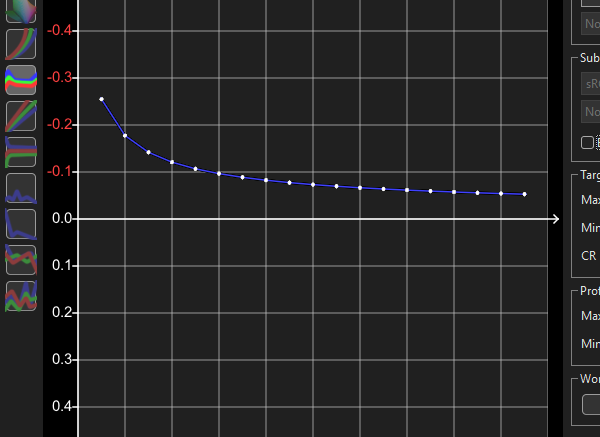
This can be seen in more detail in the following graph, which shows the BT1886 Gamma (blue plot) as a differential plot compared to a 2.4 power law gamma (the Zero line).
Note: The first and last points have no valid gamma value, so have been omitted.

As can be seen, as the curve heads towards black the gamma value decreases, lifting the brightness.
(As the graph is a differential graph, it shows the variation from the target EOFT, which is Rec709 2.4)


